

How Did "Bloody Mary's Actions Affect The Religous Makeup
Timeline

Groundwork
In a hardly post-Chaucerian Europe, the abuse of the Roman Cosmic Church building was rather suddenly brought to light. Those who were intellectually able enough to read hand-printed works of the time began to reason that the actions of the Church seemed to straight disharmonize with the written word of the Gospel. Nevertheless, these scholarly individuals were few and far between, lacking the ability to distribute information to a populace ruled by the spoken word of the clergy (which, as is clearly seen in the stories of 
The Canterbury Tales, was often tainted past the depravity of human). In hindsight, from what seems like a fleeting moment of the turbulent epoch came a change in the entire construction of the papacy and the Christian faith. This change is now known as the Protestant Reformation.
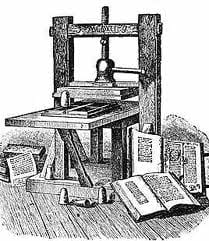
The Protestant Reformation began on October 31, 1517, when German priest Luther posted his Disputation of Martin Luther on the Power and Efficacy of Indulgences, which otherwise became known as his 95 Theses, on the door of the church. The theses outlined all of the problems he had with the Cosmic Church, specifically the sale of indulgences, which the church sold to sinners in exchange for forgiveness from God. According to the textbook, Luther believed that "the church had degenerated into a corrupt, worldly conspiracy designed to bilk the credulous and subvert secular say-so" (Norton 538).
The spread of the Protestant Reformation was as well fostered by Gutenberg's cosmos of the printing press. Luther'south 95 Theses didn't become widespread until January of 1518, when his associates translated them from Latin to German, then printed and distributed them. In two weeks, they had spread across Germany. In two months, beyond Europe. The Protestant Motion was ane of the commencement disputes in history to exist aided by the printing press.
 |
| Portrait of Henry Viii past Hans Holbein the Younger |

Henry and His Children
The Protestant Reformation hit the English Monarchy out of a failed marriage. King Henry VIII was married to his brother's widow, Catherine of Aragon. The regal couple quickly consummated the marriage, notwithstanding were presently devastated when the Queen gave nativity to a stillborn. The side by side child, a male named Henry who died fifty two days after birth. The third and quaternary and sixth pregnancies ended much the aforementioned as the first. The only truly successful pregnancy was their fifth which blessed the couple with their daughter Mary (who would subsequently be known as Bloody Mary) in 1516 (Dewhurst). Henry grew more than and more displeased with his lack of a male person heir to the throne and began to discover a replacement for his crumbling wife.
After finding a Protestant woman, Anne Boleyn, the King was fix to remarry and produce a male person heir; all he demand was the consent of the Pope to go a divorce (Trueman). The merely manner to go a divorce at the time was to go through the Roman Catholic Church, which refused to grant such things without overwhelming reasons to do so. The Male monarch began his efforts to exist granted a divorce as early every bit 1524 and on June 22, 1527 Male monarch Henry VIII approached Catherine and proclaimed that they had been living in mortal sin and that they must separate or be damned to eternal hell ("Timeline of the English Reformation"). Both the Rex and Central Wolsey and continued their fight to have his first marriage dismissed on the grounds that his wife had consummated her marriage with Henry'due south brother Arthur Prince of Wales and the Bible forbid a homo from sleeping with his brother's wife. Pope Cloudless 7 had granted a dissolution of marriage to Henry's sister Margaret in 1528, giving the King hope for the same (Jokinen).
However, Catherine the Peachy'south nephew, King Charles Five had a house concord on the papacy and urged the Pope to delay the hearings every bit much equally possible and ultimately to deny the dissolution. When Cardinal Wolsey was charged with praemunire on October nine,1529 later on failing to get Henry and Catherine'south marriage annulled, at that place was a slap-up spot to exist filled in the bureaucracy (Hall). The King assembled what is now referred to as the Reformation Parliament, in charge of finding a way to get Henry his desired divorce. Henry then granted Thomas More Wolsey'due south position as Lord Chancellor, who pushed the king to put forth acts against heresy, which would allow charges to be placed on radicals such as the Lutherans (Timeline of the Reformation and Restoration Periods"). Equally a devout Catholic his long friendship with Henry VIII started to turn sour, and More insisted on resigning, eventually doing and then on May 16, 1532 ("Timeline of the English language Reformation".
 |
| Mary I by Anthony Moris |
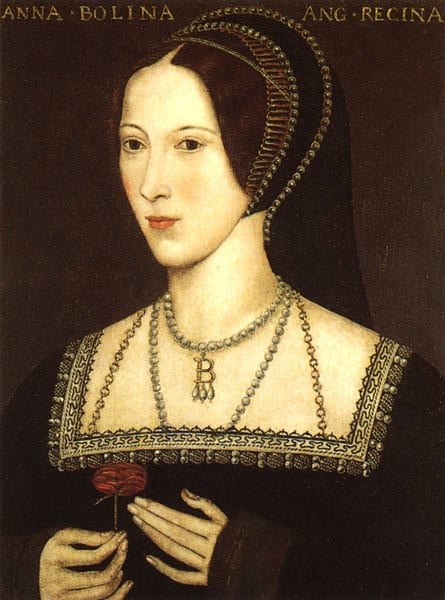
Thomas Cromwell was appointed Thomas More's position presently later and persuaded the King to officially interruption from the papacy. King Henry VIII finally married Anne
 |
| "The Peace Portrait of Elizabeth I" by Marucs Gheeeraerts |
Boleyn on January, 25, 1533 resulting in Pope Clement VII excommunicating Henry ("Timeline of the English language Reformation"). Shortly after, Thomas Cromwell put forth the Act in Restraint of Appeals, which preclude any appeals to the papacy and put England in accuse of any bug related to the clergy. Henry furthered this in 1534 with the signing of the Act of Supremacy which forced the public to swear an adjuration of supremacy declaring that Henry was the "supreme Caput of the Church building of England" and recognized his marriage with Queen Anne. Failure to do so would be considered high treason, punishable by death, a fate which Thomas More than and many others suffered as a result ("Act of Supremacy").
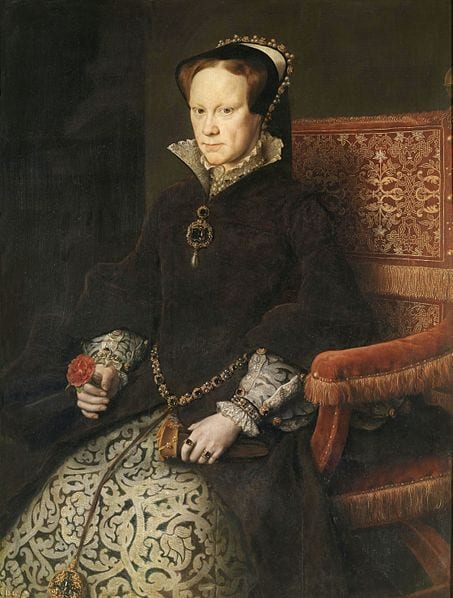
The Reformation broke new ground in 1536 when Thomas Cromwell took accuse of the dissolution of the monasteries in England, resulting in the ransacking and removal of monks in 327 monasteries across the country. The final monastery, Glastonbury Abbey, was dissolved in 1539, destroying 1 of the nigh sacred religious buildings all of its possessions (Clarke). Rex Henry VIII died on January 28, 1547 leaving Edward Half dozen, son of his third union with Jane Seymour, as the rex of England. In 1549 a compatible Protestant service becomes standard in England with the use of Edward Vi's volume of Mutual Prayer ("Timeline of the English language Reformation"). With Edward's death on July 6, 1553 Lady Jane Grey reigned equally Queen for a mere nine days followed by the reign of Henry 8's oldest kid, Mary.
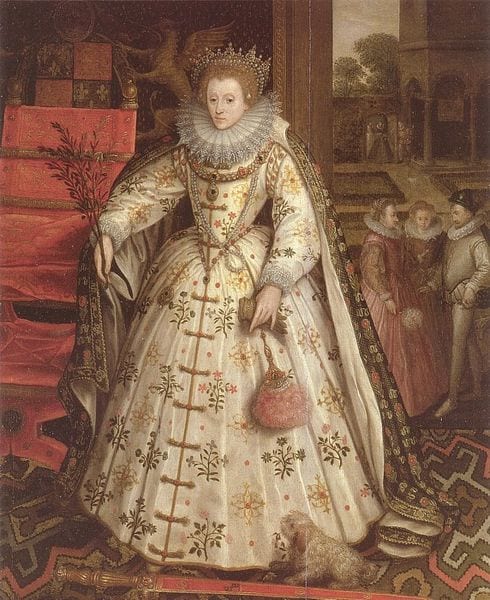
Mary I took the religious views of her mother, Catherine the Great, and spent her reign trying to plow England back to Catholicism, restoring control to the papacy and removing the title of Supreme Head of the Church as well as bringing back Roman Catholic Bishops. Her introduction of heresy laws resulted in hundreds of Protestants beingness burned at the stake. The Queen's health took a turn for the worst and on November 17, 1558 never having given nativity to an heir to her throne ("History of the Monarchy"). As a result, her one-half sister Elizabeth took the thrown with an even more adamant stance against Catholicism than her mother, Anne Boleyn, and apace wiped away all of Mary'south work. Restoring the title of Supreme caput of the Church, Protestantism took a business firm grasp equally England'southward official religion.
The Outcome on Society
The abrupt changes to the English society were the result of Martin Luther's attack on the Catholic religion and the Pope. The social degree arrangement that had been based on clergy and dignity for hundreds of years began to crumble. People began questioning the authorities, the church, and authority in general. The monks and nuns were kicked out of their cloisters and possessions were sold off (Norton 671). Important aspects of the result of the Protestant Reformation was that sin was forgiven through faith in God instead of the sale of indulgences, and scripture was taught in the common language instead of in Latin. This resulted in less force of the clergy and an arguable decrease in the amount of abuse in the church system.
As a effect of the abiding shifts in faith, the Protestant Reformation affected the English language society in a drastic way. The people of England were at present obligated to choose betwixt their fidelity to their ruler or their religion. Later on Henry VIII's death in 1547, his successors changed the religion from Catholicism to Protestantism. It was a religion tug of way betwixt the Catholics and Protestants for many years. When King Henry Viii'due south son took the throne, at 10 years old, Edward 6 and his supervisors, the Dukes of Somerset and North Cumberland, enforced Protestantism for the outset time. When Edward Half-dozen passed abroad in 1553, he was succeeded by Mary, a devout Catholic who changed the national faith back to Catholicism. Openly Protestant believers were persecuted. They were forced to convert back to Catholicism, leave the country, or were burned at the stake (Norton 672). Five long years later, when Mary I died, her sister, Elizabeth I, reestablished Protestantism equally the Church of England's religion. However, some England people had a difficult time accepting this new religion because they were attached to Catholicism.
The Reformation was a very unsettling time to be an Englishman, specially if you were office of the court. With the religion constantly switching back and forth, the people of England were left to accept whatever organized religion was being backed at the detail time or face expiry. However if they became to adamant about the crusade, they too risked execution if the tides turned equally Thomas More and Thomas Cromwell both experienced. Forth with these 2 men, hundreds of others were executed for their religious beliefs, Catholics, Puritans, and Lutherans alike. CITATION? What fabricated matters even worse was the constant debate over who was to rule the state later on Henry VIII's death. Subsequently the birth of Elizabeth, people were forced to swear fidelity to her equally the successor to the throne despite Mary'south assertion that she was the rightful heir. When Edward is born this gets mixed upwards once more, as males come first in the line of succession. However, his immature age meant that he had to have a supervisor, whose position was highly sought after. Things get even more complicated so that when Lady Jane takes the throne for a mere nine days before beingness executed. The constant doubtfulness of who is in charge and what religion to believe made living in England very nervus wracking.
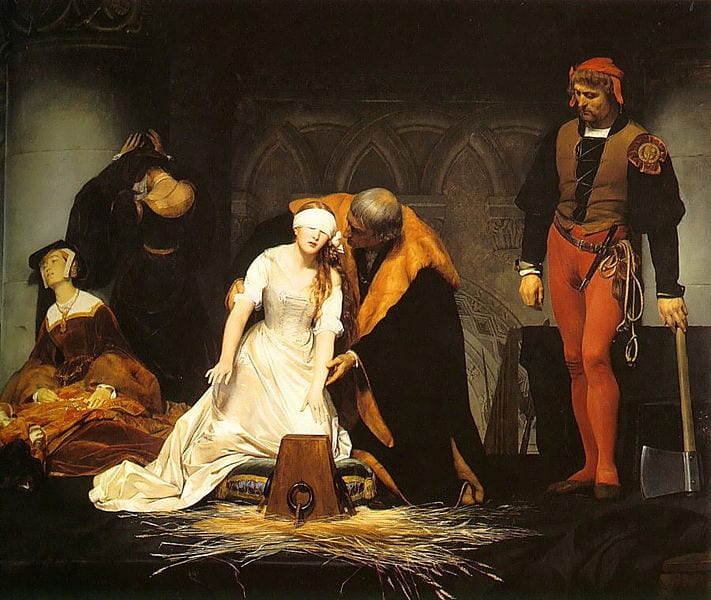 |
| The execution of Lady Jane Grey in the Tower of London in the twelvemonth 1554 |
Revolts confronting the Churches in the "Low" Countries
- Rebels revolted against Henry VIII for the sacking of monasteries in the Low Countries
- Leaders brought to the king who promised to look at their requests
- Henry persecutes the leaders for high treason and has them killed (Duke)
The Religious Wars in France (1562-1589)
- Catholics vs Huguenots (French Protestants)
- Saint Bartholomew's Massacre
-Catherine deMidici persuaded her son, Rex Charles IX, to lead a massacre against the Huguenots.
-Over 8,000 Huguenots were murdered. - Edict of Nantes ("French Protestant Reformation")
The Religious Wars in Spain
- Mary Queen of Scots executed
- Castilian Armada
The Thirty Years State of war (1618-1648)
- The most devastating war in Europe that was between Catholic and Protestant states in the Holy Roman Empire
- Concluded with the Treaty of Westphalia ("Thirty Years War")
 |
| Thomas More |
Influential Authors of the Reformation
Sir Thomas More than (1478-1535)
"Sir Thomas More than was built-in in London and was a lawyer, scholar, author, member of parliament and chancellor under the reign of Rex Henry 8" (BBC). Upon condign lord chancellor, More put much of his energy into the anti-Protestant campaign against Martin Luther. He was very fervent in his belief of the Catholic Church and his opinion against Protestantism; for instance, More disagreed fiercely with Tyndale's interpretation of the Bible and communicated this in written attacks. Further, More aided King Henry Eight in writing his invalidation of Protestantism titled The Defense of The Seven Sacraments. "More had two problems with Lutheranism: (one) He disagreed with Luther's notion that Christians could not enrich their ain conservancy through good deeds and (2) he disagreed with Luther's interpretation of the text" (Norton 679). More wrote A Dialogue Concerning Heresies in 1529 in which he creates a dialogue between himself and a fellow interested in Protestant ideas; his goal with this text was to turn English men and women away from practicing Protestantism (Norton 679) More is all-time known for his early on work, Utopia, written in 1515, in which he describes an imaginary society and political system. In 1534 Henry declared himself head of the English language Church and More did not hold with this; he would non acknowledge Henry every bit the head and was somewhen convicted of treason and was beheaded on July 7, 1535 (Bridgett).
John Calvin (1509-1564)
 |
| John Calvin by J.F. Cazenave |
Born in Picardy France in 1509, "John Calvin possessed one of the about brilliant minds amid Reformation theologians, sparking a movement that revolutionized the Christian church building in Europe, America, and ultimately the residue of the world" (Zavada). After studying ceremonious law in college, Calvin left France where he was born Catholic. He traveled to Geneva, Switzerland and preached about Protestant beliefs. Calvin wrote Institutes of the Christian Religion in 1536 about aspects of Protestantism; it is considered ane of the near important works from the Reformation period. Upon existence asked to leave Geneva after religious conflict, Calvin moved to Strasbourg, France just eventually returned to Geneva. Over time, Calvin'south beliefs began to move abroad from those of Catholicism and Protestantism. "He taught that God divides humanity into ii groups: the Elect, who will be saved and go to sky, and the Reprobates, or damned, who will spend eternity in hell. This doctrine is called predestination. (Zevada)" Calvin also believed in Limited Amende; this is the notion that Jesus only died for certain people, or the "elect." Further, Calvin believed that those who were "elect" could not resist God's call to Sky (Zavada). Calvin's opinions were rather extreme, only, all the same, in that location are withal those that follow his thought today. His religious views and doctrines are now known as Calvinism.
References
"Act of Supremacy (England [1534])." Encyclopedia Britannica Online. Encyclopedia Britannica, n.d. Web. 06 Dec. 2012.
"Christianity – Protestant Reformation France Religious Wars." The French Protestant Reformation. N.p.. Web. 6 Dec 2012. <http://histclo.com/act/rel/organized religion/christ/refor/fra/rw.html>.
Clarke, Lindsay. "The Dissolution of the Monasteries in the 16th Century." History Cyberspace Where History Comes Live Globe U.s. History Online The Dissolution of the Monasteries in the 16th Century Comments. British Heritage, 12 June 2006. Web. 06 Dec. 2012.
Dewhurst, John. "The Declared Miscarriages of Catherine of Aragon and Anne Boleyn." Medical History Journals 28.ane (1984): n. pag. National Middle for Biotechnology Data. Web. six Dec. 2012. <http://http:www.ncbi.nlm.nih.gov/pmc/articles/PMC1139382/?folio=1>.
Duke, Alastair. E Reformation and Revolt in the Low Countries. New York: Continuum International, 2003.
Hall, Edward. "Master Sources: The Fall of Cardinal Thomas Wolsey, 1530." English language History. Northward.p., due north.d. Web. 06 Dec. 2012. <http://englishhistory.net/tudor/priwols1.html>.
"History of the Monarchy The Tudors Mary I." The Official Website of the British Monarchy. N.p., due north.d. Web. 06 December. 2012.
Jokinen, Anniina. "The Life of Rex Henry Viii." Luminarium. N.p., xi Aug. 2006. Web. 06 December. 2012. <http://www.luminarium.org/renlit/tudorbio.htm>.
The Norton Anthology English language Literature: The Sixteenth Century/The Early Seventeenth Century. Ed. Stephen Greenblatt et al. Vol. B. New York: W. West. Norton & Visitor, 2012. Print.
"Xxx Years' War (European History)." Britannica Online Encyclopedia//. North.p.. Spider web. six Dec 2012. <http://www.britannica.com/EBchecked/topic/592619/Thirty-Years-War>.
"Thomas More." BBC. Northward.p.. Web. six Dec 2012. <http://world wide web.bbc.co.uk/history/historic_figures/more_sir_thomas.shtml>.
"Timeline of the English language Reformation." Wikipedia. Wikimedia Foundation, xi Mar. 2012. Web. 06 Dec. 2012.
"Timeline of the Reformation and Restoration Periods." Timeline of the Reformation and Restoration Periods. Northward.p., n.d. Web. 06 Dec. 2012. <http://www.britannia.com/history/reftime.html>.
Trueman, Chris. "The Reformation." The Reformation. N.p., north.d. Web. 06 December. 2012. <http://www.historylearningsite.co.uk/reformation.htm>.
T. E. Bridgett, Life and Writings of Blessed Thomas More (1913). <http://world wide web.historyguide.org/earlymod/stmore.html>
"William Shakespare." bio. N.p., n.d. Web. half dozen Dec 2012. <http://www.biography.com/people/william-shakespeare-9480323>.
Zavada, Jack. "John Calvin Biography." . N.p.. Web. 6 Dec 2012. <http://christianity.almost.com/od/presbyteriandenomination/a/John-Calvin.htm>.
Images (in gild of appearance): This needs fixing
https://en.wikipedia.org/wiki/Martin_Lutherhttps://sites.udel.edu/britlitwiki/files//2018/06/File3AHans_Holbein_d._J._074.jpg
https://sites.udel.edu/britlitwiki/files//2018/06/File3AMary_I_of_England.jpg
https://sites.udel.edu/britlitwiki/files//2018/06/File3AAnneboleyn2.jpg
https://sites.udel.edu/britlitwiki/files//2018/06/File3AEl_bieta_w_pC3B3_nym_wieku.jpg
https://sites.udel.edu/britlitwiki/files//2018/06/File3AExecutionJaneGrey.jpg
https://sites.udel.edu/britlitwiki/files//2018/06/File3AWilliam_Shakespeare..jpg
https://sites.udel.edu/britlitwiki/files//2018/06/File3AJohn_Calvin_21.jpg
https://sites.udel.edu/britlitwiki/files//2018/06/File3AHans_Holbein_d._J._065.jpg
Source: https://sites.udel.edu/britlitwiki/the-reformation-and-british-society/
Posted by: smithupprow.blogspot.com
0 Response to "How Did "Bloody Mary's Actions Affect The Religous Makeup"
Post a Comment